Why Teleoperated Security Robots Are a Better Fit for Commercial Property Patrols
Commercial properties need visible patrol, fast response and human judgment. Here is why teleoperated security robots are a stronger fit than autonomy-only patrol.
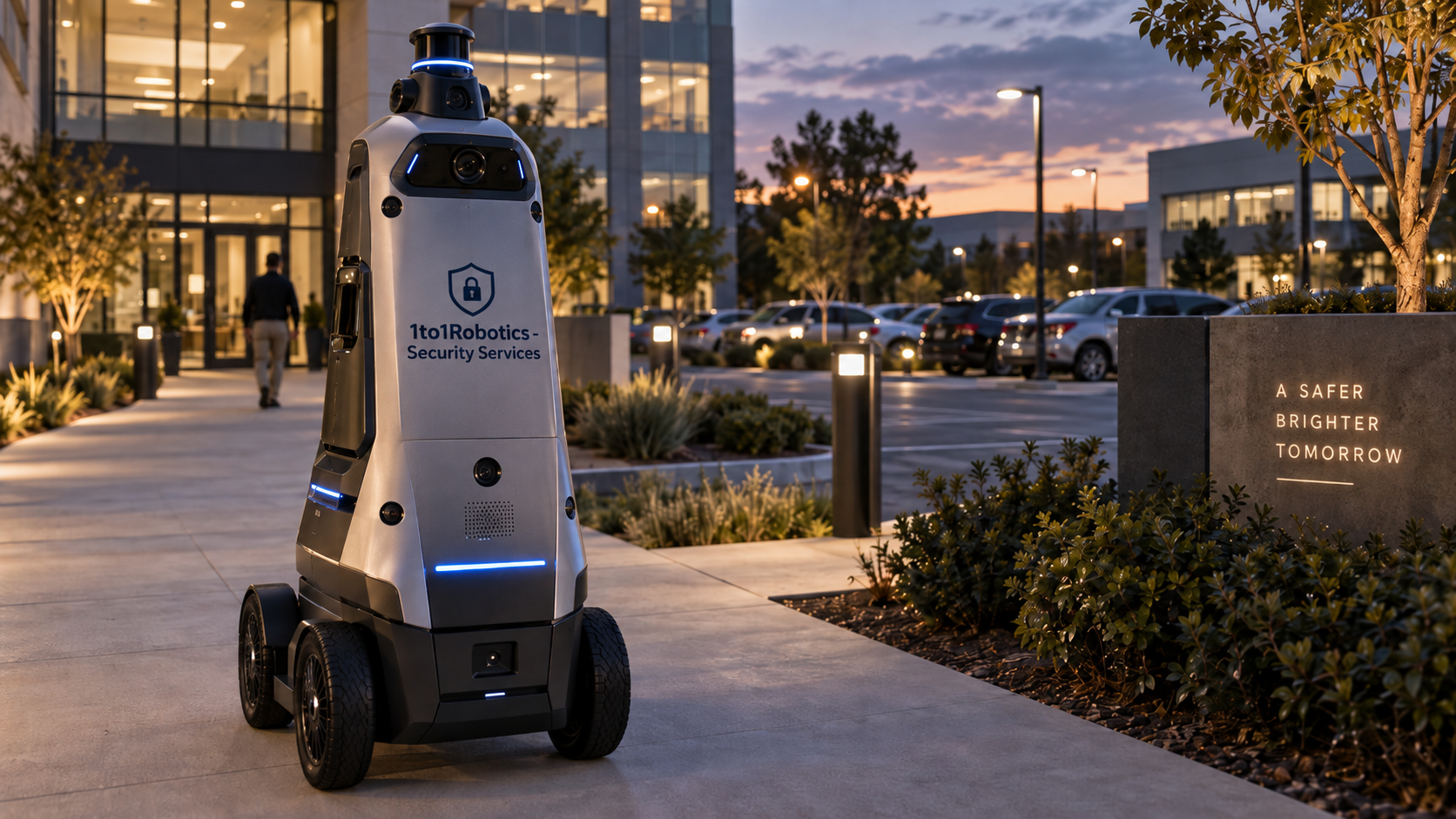
Commercial properties are harder to protect than ever. Office campuses, retail centers, industrial parks, parking lots, medical office buildings, and mixed-use developments all face the same challenge: they need visible security coverage, fast response, and a better experience for tenants and visitors—without the rising cost and inconsistency of traditional guard-only models.
That challenge is exactly why security robotics has attracted so much attention.
Companies like Knightscope helped bring robotic patrol into the mainstream. Their work proved that property owners are ready for something beyond the old model of relying only on fixed cameras and foot patrols. But the industry has also learned an important lesson: fully autonomous patrol is not the same thing as effective security.
In fact, some of the most publicized stumbles in the category have made that clear. Robots can look impressive on a brochure or in a controlled demo, but commercial properties are not controlled environments. They are messy, constantly changing, and full of exceptions. Sidewalks close. Deliveries arrive after hours. Gates are locked. Elevators require access. Visitors get confused. Suspicious people do not behave in predictable ways. When a robot cannot adapt in the moment, the value of the patrol drops quickly.
The Real Problem With Autonomy-Only Patrol
The weakness of many autonomous security robots is not that they can never move around a property. It is that movement alone is not security.
A patrol robot may detect motion, capture video, or flag an anomaly. But what happens next?
If the robot encounters construction cones, a blocked route, or an unexpected obstacle, it may stop or reroute—but it may also lose the ability to reach the place that matters most. If it detects suspicious activity in a parking lot, it may record the event—but can it immediately challenge the person, ask questions, gather context, and escalate with human judgment? If a delivery driver arrives at a locked building after hours, can it provide concierge-like assistance that feels helpful rather than frustrating?
These are not edge cases. On commercial properties, these are everyday realities.
That is why the market itself is moving toward a more human-backed model. Knightscope now describes its platform as a combination of autonomous machines, software, real-time monitoring, and licensed security personnel, all under a managed service model. Cobalt similarly emphasizes AI-driven monitoring combined with human judgment and 24/7 expert security operators. In other words, even leading companies in the category are acknowledging that real-world security requires more than autonomy alone.
Why Commercial Properties Need Human Judgment in the Loop
Security on a commercial property is rarely just about seeing what happened. It is about deciding what to do next.
A camera can see someone loitering near an entrance. A robot can detect movement between parked cars. An analytics platform can flag a tailgating event. But someone still has to interpret the situation and respond intelligently.
Was that person truly trespassing—or just waiting for a ride?
Is the open door a threat—or a maintenance issue?
Is the person in the loading area a contractor with authorization—or someone where they should not be?
Security is full of gray areas. And gray areas are where fully autonomous systems often struggle.
Human operators, by contrast, can assess tone, body language, context, urgency, and intent. They can speak, listen, question, warn, reassure, and escalate. They can make judgment calls. That is what turns technology from passive monitoring into active protection.
How Teleoperated Security Robots Solve the Problem
Instead of relying only on autonomy, teleoperated robots combine robotics, sensors, cameras, AI support, and live remote human control. That means your property gets the persistence and reach of a robot—but also the judgment, adaptability, and accountability of a real person.
Here is what that changes:
1. Immediate Human Engagement
If a robot sees suspicious activity, a remote operator can speak through the robot instantly. That alone changes the interaction. A live human voice can challenge trespassers, question unknown visitors, guide delivery personnel, or de-escalate a situation before it becomes an incident.
2. Better Response to Real-World Conditions
Construction barriers, blocked sidewalks, after-hours access issues, unexpected crowds, or vehicles in unusual places are common on commercial properties. A teleoperator can evaluate the situation in real time and adjust the response instead of letting the patrol fail at the moment it matters.
3. Active Deterrence, Not Just Passive Recording
A traditional security camera records. A teleoperated robot can intervene. It can approach a situation, illuminate an area, issue a verbal warning, capture close-range video, follow suspicious activity, and act as a visible security concierge. That is a much stronger experience than a silent machine that only records.
4. Safer, Smarter Escalation
When an issue becomes serious, teleoperated systems allow a live professional to document the situation, coordinate with on-site personnel, notify management, or contact first responders with better information. The result is faster, more informed escalation.
5. Broader Coverage Without Blindly Replacing People
Teleoperated robots are not about removing humans from security. They are about extending human reach. One remote team can support multiple properties, provide after-hours coverage, and focus human attention where it is actually needed—rather than paying for constant physical presence everywhere, all the time.
The 1to1Robotics Approach
At 1to1Robotics, we believe the future of security robotics is not autonomy for autonomy’s sake. It is human-centered robotic security.
Our teleoperated robots are designed to help commercial property owners and operators close the gap between detection and response. They provide a visible mobile presence, high-quality video and sensor awareness, and the ability for a live remote operator to step in when judgment matters.
That means your property gets more than a patrol route. It gets:
- Visible deterrence
- Live remote interaction
- Better incident handling
- Improved tenant and visitor support
- Centralized oversight across one site or many
Whether you manage an office complex, parking facility, retail property, industrial site, or multi-building campus, the goal is the same: deliver security that is more responsive, more flexible, and more useful in the real world.
The Bottom Line
The lesson from the first wave of security robots is clear:
Autonomous patrol alone is not enough.
Commercial properties need systems that can adapt to change, engage with people, interpret context, and support real response. That is why teleoperated robotics is such a powerful next step. It brings together the efficiency of robotics and the intelligence of human decision-making.
And in security, that combination matters.
Let’s Talk About Your Property
If your company is exploring security robotics, evaluating guard alternatives, or looking for a better way to protect commercial properties, 1to1Robotics can help.
Contact us to discuss your site, your coverage goals, and how our teleoperated robotic security solution can support your team with smarter patrols, better visibility, and real human response when it counts.